Introduction to Bridge classes typically introduce students to the slogan “third hand high”. This slogan suggests that as a defender, when you are the third player to the trick, generally it’s best to play your highest card. The underlying general principle is that because partner may well have a high card or two in the suit, you don’t want to let declarer win the trick cheaply. But bridge is not a “never or always” sort of game, so although usually it’s best to play high as third hand, it’s not always best. Following is an example of the most typical situation, in which playing “third hand high” is correct:
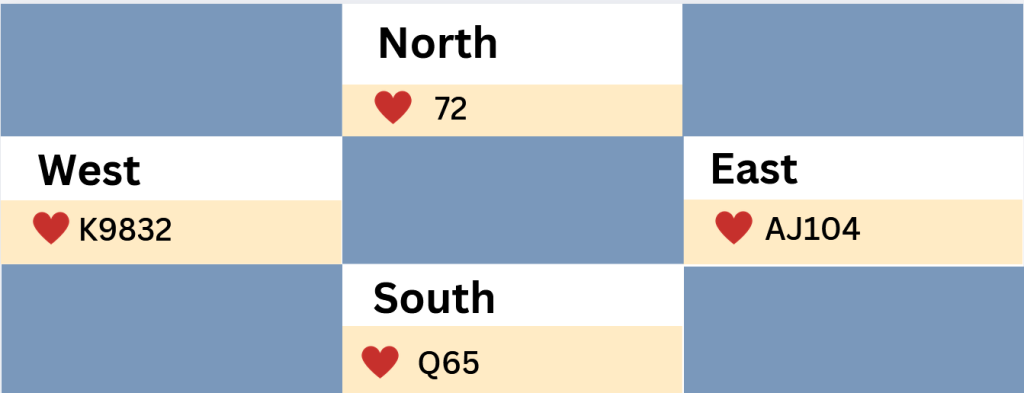
West leads the three, and East should play the Ace (not the Jack or ten). In this situation, the textbooks refer to East’s error in playing the Jack or ten as “finessing against partner”.
But bridge is not an “always” or “never” sort of game, so here is an example in which playing “third hand low” is correct:
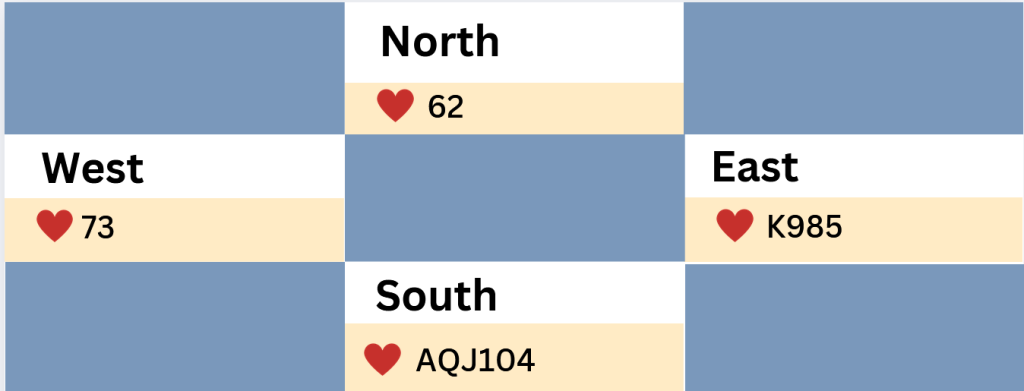
West leads the seven; now it costs a trick for East to play the King. If South showed length and/or strength in hearts, East should consider withholding the King. But if there is no other relevant information, playing the King gains only when West’s holding is something like AQ107(x), and often East will be in a good position to judge whether that is a reasonable expectation.
For more information, see Real World Bridge 9: Defense.